Collective
case study of a field-based teacher education course:
Breathing
life into theories of learning to teach
Kathy Sanford and Tim Hopper
Faculty of Education
University of Victoria
(Submitted January, 2002 to CJE)
Abstract
This paper reports the findings of a three-year action research project focused on a campus/field-based introductory teacher education course offered at a major North American university. The purposes of the study were to examine the possibilities offered through a campus/field-based teacher education course and to understand how to make effective use of enhanced opportunities for understanding teaching in a specific context. An action research project consisting of three cumulative case studies is offered in evidence of the researchers’ claims that field-based experiences offered within a campus based course, (1) fundamentally changes the teacher student relationship, and (2) offers a unique and positive opportunity for pre-service teachers to gain a framework understanding of the role of being a teacher.
Introduction
This paper reports the findings from a
three-year study of a campus/field-based teacher education course intended to
provide an initial introduction to the teaching profession. The course was designed on constructivist
tenets drawn from Dewey and Vygotsky where everyday or primary experiences
within a culture serve as the key to higher order thinking and meaningful
learning (Glassman, 2001). Two
researchers, one who was the instructor of the course and one who was acting in
the role of participant observer and critical friend, conducted the study. The
course was designed with an inquiry-oriented field experience (Zeichner, 1992)
that focused on the development of reflective teaching practice with
fundamentally altered role and power relationships between course instructor,
school teachers, and pre-service teachers. A significant characteristic of the
course was that over half the classes were relocated to classrooms within
school sites. A key finding of the research was that an overwhelming number of the
pre-service teachers reported that in contrast to most, if not all other
university classes, this course offered “real” learning about teaching that
would stay with them.
Researching pre-service teachers:
Positioning in the scholarly landscape
The following key terms from the teacher education literature have been identified to position this research in the scholarly landscape. “Initial field-based teacher education” refers to experiences in schools where pre-service teachers have observation experiences where they learn the role of teacher and the nature of schools. Their school-based experiences include observations, tutoring, and participation in school activities, teaching and internship. School based teacher education exists when pre-service teachers are located within a school in a practicum with supporting seminars (MacDonald, 1992; Duquette, 1993; Shen, 1994; Wiseman, 1995). These experiences are significantly different from clinical experiences that are characterized by the course instructor’s careful planning and determination of goals including microteaching, orientation visits to schools and teacher aid roles (Clarken, 1993; Metcalf, 1996). These clinical experiences, complemented by campus-based teacher education where theories of teaching are presented and studied (Blocker, 1997; Metcalf,(1996) highlight the separation between universities and schools. This research advocates the integration of campus-based teacher education with field experiences. Such an integration is designed to develop teacher identity, encourage constructivist learning theories, and develop collaborative relationships with schools.
In teacher education there are few reported studies that examine the effect on "learning to teach" through a teacher preparation course conducted within a school (Cooper, 1996; Duquette, 1997; Samaras & Shelly, 1998). One field-based teacher education study reported by Samaras and Shelly (1998) documented “that socially shared cognition in field work and course work makes a significant difference in enhancing pre-service teachers' sense of what it means to teach in terms of using partnership for cognitive and collegial support, perspective-taking, social negotiation, and ownership” (p. 715). However, in Samaras and Shelly’s research, limited data was reported on the influence of a field-based teacher education course on teachers, course content and university instructors.
Most research on pre-service teachers’ learning focuses upon the field experience as a separate entity from the university based course work (Kagan, 1992; Wideen, Mayer-Smith, & Moon, 1998). This separation is supported by the traditional sense of a knowledge-for-practice mindset implying that formal knowledge is taught at the university and practical knowledge is learned in a school as theory is transformed into practice Cochran-Smith (1999). Attempts to change such traditional stances, as Russell (2001) and Wideen & Lemma (199) have reported, have had limited successs with the how pedagogy of teacher education is trapped in a default teaching style of “teaching as telling” (Finkel, 2000).
Zeichner (1992a, 1999) suggests that dissatisfaction with teacher education stems from the awareness that beginning teachers tend to teach the way they were taught and often follow traditional didactic practices. Collaboration between schools and universities offers alternative ways to renew our teacher education programs (Goodlad, 1988), creating new understandings of teacher learning (Lave, 1991; Warren, 1996) and more liberating relationships between teachers, university instructors and pre-service teachers (Hausfather, 1996). Collaborative relationships between schools and universities take time to evolve but they offer the potential to address the dissatisfaction with the preparation of teachers, in particular, the on-going separation between theoretical teacher knowledge and practical pedagogical knowledge (McCulloch, 1993).
Field-based teacher education contrasts with many current teacher education programs based in a positivist tradition, where discrete courses are offered, fragmented between departments, with little or no connection to field-based experiences (McWilliams, 1994; Grimmett, 1998; Zeichner, 1999). This study has sought to address this lack of connection by integrating field and campus experiences to create a framework for unifying professional knowledge necessary for a postmodern culture and positioning teachers as change agents. The synchronized integration of teacher education in schools and on campus, we believe, models the development and interweaving of professional, personal, and contextual knowledge rather than seeking to identify a discrete body of knowledge to be mastered by prospective teachers.
Purpose
The purposes of this study were: 1) to develop a collective case study of a three-year action research investigation into the instruction and organization of a field-based teacher education course aimed at preparing pre-service teachers to become effective teachers; and 2) to understand how to make effective use of enhanced opportunities created by relocating a substantial portion of a teacher education course within a school.
The idea of teaching university courses in a
school has been advocated by leading education scholars in North America (Grimmett, 1998; Zeichner, 1992) and is encouraged by the principles advocated by
Holmes report (Holmes Group, 1990).
Context
The
research was conducted within a course known as the "Introduction to the
Profession of Teaching" (EDFX200).
This course contains the initial field experience that pre-service
teachers have to complete in their teacher preparation course at large North
American University. Just prior to the
inception of this study the course became a pass/fail course that the
pre-services had to successfully complete in order to advance to the next year
of their teacher preparation program.
Data reported in this presentation has drawn on three groups of
participants over three years of research.
The course was conducted in the spring term over a three-week period and
involved approximately 45 pre-service teachers each year. Pre-service teachers attended class daily
for three hours. Five different schools
from different socio-economic areas and representing different student age
groups were involved in the course.
Theoretical framework
The importance of teaching a university methods
class within a school context is based on the concept of situated learning (Vygotsky, 1978) and personal experience (Dewey, 1963). These
concepts are based on the idea that learning needs to be personal, purposeful,
and that experience and understanding are in constant interaction. In this way
contextual and interactional episodes and cues within a school context breathe
life into the theories of learning to teach.
The course draws on social constructivist
tenets for learning and applies these to learning how to teach (Richardson, 1997; Samaras & Shelly,
1998). These tenets
and their connections to the characteristics of the teacher preparation course
(EDFX200) were discussed in detail in (Sanford
& Hopper, 2000), where the first year of this study was
reported. Briefly, situated learning in
the classroom led to socially shared cognition between pre-service teachers in
electronic discussion groups, group assignments and class discussions. Joint activity in all learning tasks
encouraged students to learn from their peers more develop insights and
experienced teachers in the field (characterized by Vygotsky (1978) zones of proximal development).
A key concern of the course was for pre-service
teachers to learn the role of a teacher by participating in school situations
in short regular visits, followed by mediation in whole class and small group
activities, concluding with individual personal reflection. In this way the course followed situated
theories for learning (Borasi &
Siegel, 2000; Lave & Wenger, 1991) where rather than focusing on
the acquisition of knowledge, learning in the course focused on learning how to
participate or become a member of a particular community of practice. A
major focus of learning in the course was in creating the foundation for
learning to talk and act as a member of a teacher community, taking on the
language, identities, and practices of the educational community.
The study adopted a practical action research
process that followed Kemmis and
McTaggart's (1982) criteria for a study to be considered action research. In this way the study focused upon “(1) the
improvement of practice, (2) the improvement…of the understanding of the
practice by its practitioners, and (3) the improvement of the situation in
which the practice takes place” (p. 84).
The focus of the research, led by the course instructor and supported by
the second researcher acting as “critical friend”, was on improving the
influence of the course upon attitude, understanding, and reflective ability.
Action in this study was focused upon the activity of the pre-service teachers
and their resulting learning.
Over the three-year period the course evolved through action research cycles of PLAN, ACTION/OBERVATION, REFLECTION and RE-PLAN. After each year of the course a case study on the field-based teacher education course was written. Stake (1994) calls this an instrumental case study because it provides insight into a particular phenomenon. These case studies are reported chronologically and collectively in this paper. As Stake (1994) and Merriam (1991) comment, a collective case study leads to a better understanding and theorizing of a particular phenomenon, in this case, a recurring field-based teacher education course.
Data sources and analysis
During the course one researcher with expertise in the use of ethnographic processes (Spradley, 1980) acted as a participant observer. Field notes were kept, recording events from the course and discussions between pre-service teachers, course instructor and teachers in the schools. Data was recorded in numerous matrices, charts and concept maps as a precursor to data displays (Miles & Huberman, 1984), and in the final year of the study data was transferred into NUD*IST Nvivo software program. Following the guidance of Bazeley and Richards (2000), data was entered, coded in nodes (categories) and mapped, searched, modeled, synthesized and analyzed. The software program allowed three years of data to be integrated and offered evidence of recurring patterns of experience and insight from the participants in the course. The other researcher, in the role of instructor, drew on the data analysis to refine and develop course organization and instructional process.
As part of the course, pre-service teachers reflected upon course material and their experiences from the school in a reflective journal. The journal was established at the beginning of the course and the pre-service teachers were required to write a minimum of one page a day for the duration of the course, focusing on discussion and activities initiated in class, observations in schools, and course readings. The first response was focused around two instructor-posed questions: What is teaching? What is learning?, followed by open-ended responses for subsequent journal entries. The pre-service teachers submitted their first journal entry on the second day of class and had them returned, with instructor comments, the following day. This pattern of writing and responding was continued throughout the course, and was an important aspect of their learning, enabling them to record observations they found interesting, confusing, or otherwise noteworthy, articulate their forming beliefs and ideas about teaching and learning, and receive feedback from an interested other. The nature of the comments written by the instructor was critical to the ability of the pre-service teachers to begin in-depth self-examination. Rather than being evaluative, the comments were probing, encouraging, and attempted to stimulate further thought on complex issues. At the end of the course, the pre-service teachers were asked to re-read all of their previous journal entries and write a "read-back", an activity which enabled them to re-visit their previous thoughts and questions, recognize the depth and breadth of their learning, articulate, summarize, and categorize their learning, and to extend their learning in a final reflective piece of writing. The non-graded aspect of the course enabled them to develop their ideas without fear of censure by way of a grade -- they were not expected to "measure up" to any preconceived criteria of learning.
Pre-service teachers also participated in an electronic mail listserv assignment. The course readings were the focus of the listserv entries; each day several pre-service teachers were responsible for leading the discussion of a specific assigned reading. The responsibility of their classmates was to read the entries that had been posted and respond in some way. The pre-service teachers were all required to post a minimum of six entries over the duration of the course. These entries were often more brief than those written in their journals, and raised issues not always addressed in class. While the journal reflections were carried on between individual pre-service teachers and the instructor, the listserv was a more public forum, and although the instructor read the entries she did not respond. The listserv provided a further way for pre-service teachers to ask questions, to test out theories, and to gain feedback. Often pre-service teachers who did not contribute verbally in class used this forum more often. And while the focus of the listserv began with course readings, there was a wide range of issues raised and a great deal of integration of knowledge gained through reading, discussing, observing, and acting. In addition to informal comments and observations made throughout the course, these reflective assignments provided rich and detailed data on the pre-service teachers’ insights on teaching, enabling both the pre-service teachers and the instructor and researcher access to written records of growth and development throughout the course.
Using a process of constant comparison, each of the data sources was coded and analyzed in the following manner:
1. Participant observer’s notes were coded into nodes in the Nvivo software, then through constant comparisons these nodes were developed and connections were made between nodes using trees maps and models. Attributes of nodes and participants were coded into the software program. As data was constantly coded and contrasted, categories emerged that were used to describe the culture of the course. These categories were used to frame questions asked of the pre-service teachers using the e-mail medium. These answers were cross-referenced with the participant observations.
2. The researcher and instructor read each journal entry and responded with comments to pre-service teachers. Comments often encouraged the use of examples or posed probing questions such as “What is teaching?” “What would you do?” “Why do you think this is important?” After the journals were read, key ideas and quotes from each journal entry was entered into NVivo. Each entry was referenced by name and date. Journal entries were then coded using the nodes system developing in NVivo and from analysis of previous data in the study. Data was coded at existing nodes or new nodes to identify new ideas.
3. Listserv entries were collected from the e-mail software in files for each participant. These documents were then imported into NVivo. The listserv entries were coded by participant’s name and date of entry. The imported data was then read and analyzed with coding made to the existing node (category) system. The node system was continuously interrogated for recurring ideas and patterns with nodes merged together, map and remapped, as meaning was more refined with recurring node patterns for the source of data.
The authors validated coding by seeking agreement on definitions, with checks made with teachers and pre-service teachers. Twelve of the pre-service teachers who volunteered were randomly selected and three teachers and one principal involved in the project over the three years were interviewed with questions based on the findings from 1 to 3 above. These interviews were transcribed. The researchers read and reread the transcripts with marginal remarks and memos. Interviews were imported into NVivo and integrated into the node system. As patterns emerged the Nvivo software was used to cross-examine their significance with themes developed that represented the core patterns over the three-years of the study, and the emerging patterns associated to changes in the course.
In summary, the participant observation data created a broad background sense of the course from a participant’s perspective. The journal and listserv offered an insight into the pre-service teachers’ thoughts and showed changes in their growing awareness of the role of a teacher. The e-mail questions and interviews offered a comparative insight of the course to other courses in the university and confirmed speculations gained from initial data sources.
Detailed description of
the course
In addition to the reflective journal and listserv assignments, the pre-service teachers completed a variety of other assignments and activities. All of these incorporated opportunities for: 1) integrating learning from field-based and campus-based sources; 2) collaborating and sharing; and 3) reflecting on learning. The course had evolved over a ten-year period from a lecture series focusing on educational issues with an accompanying but largely disconnected field experience, to an integrated field-based experience that brought together practical and theoretical perspectives. The course developed opportunities for the pre-service teachers to contextualize their learning of societal issues that impacted education with teaching skills in schools and classrooms. A critical development of the course was the change to a pass/fail type of evaluation from a graded course. This enabled pre-service teachers to share their ideas, develop personal teaching identities, collaborate with classmates, and focus on their learning rather than on the mastery of a discrete body of knowledge disconnected from other courses or experiences. These changes enabled the transition from student attitude to professional attitude and the focus of the course expanded to include both process as well as product.
The journal responses and listserv entries were two of the assignments focusing on process rather than product. The pre-service teachers were also required to complete field-based activities that focused their observations in classrooms in the areas of classroom management, planning, diversity, and teaching roles. These activities required close observation followed by reflection on the significance of the observations.
Formal assignments that focused more on a product were also part of the course requirements. A professional bibliography that focused on an educational issue, e.g., bullying in school, language immersion programs, cultural diversity, funding cutbacks, brain-based learning, etc. was assigned early in the term, and pre-service teachers were asked to explain why the issue they selected was of personal and professional significance. Thus they began to see themselves as educational researchers, informed of changes to theoretical underpinnings and to the knowledge base. At two different times in the term, pre-service teachers were required to plan and teach short lesson segments, followed by a written reflection focused on what they had learned from the experience. They often worked in pairs, which enabled them to experience the power of collaboration and the need for careful planning. These experiences enabled them to see themselves as practitioners, experiencing the world of teaching complexities. The culminating project for the course encouraged integration of learning from various sources -- classrooms observations, discussions with teachers, library research, personal experiences and practice -- into a formal professional presentation. The pre-service teachers were encouraged to consider their audience, e.g., colleagues, parents, pre-services, general public, when selecting an appropriate format for their final project, which included bulletin board displays, videotaped teaching practice with follow-up interviews, brochures, handbooks, children's books, and interactive power-point presentations. These projects allowed the pre-service teachers to analyze, synthesize, and assess their learning throughout the course (see website for specific examples).
The overall goal of this course was to provide a pedagogical foundation upon which the pre-service teachers could begin to understand the complexities of the profession, and to build their framework for their future educational learning and practice. The course attempted to introduce broad social issues in relation to more focused classroom issues and in relation to their own developing teacher selves. From this initial field-based experience, they could make links to future informal and formal learning experiences in a coherent manner.
Summary results of collective case studies
The following insights were gained from the yearly case studies of the EDFX200 course.
Year 1
PLAN: The intent of the research was to investigate how conducting a teacher preparation course in a school influenced pre-service teachers' perceptions and understanding of teaching and to examine how the application of Vygotskian tenets for learning and development influenced pre-service teacher learning in a teacher preparation course.
ACT/OBERVATION: The focus was to develop theoretical support for how a field-based teacher education course would improve learning to teach. Social interaction was used to develop pre-service learning in group assignments, listserv discussion and class discussions. The school culture was used as a way of stimulating inquiry into the practice of a teacher. Participant observation, journals and e-mails were used as a source of data.
REFLECTION: The social nature of the course with the stimulus of the school environment encouraged pre-service teachers to question long held assumptions and fears about teaching. The Vygotskian framework gave theoretical support to an alternative form of teacher education. This alternative asked pre-service teachers to learn from the experience of schools, learn from each other and develop an understanding of teaching that moved them away from simplistic notions of how to be a teacher and notions of classes of children that were like them. The reality of managing a class of children produced a fear in many pre-service teachers that needed to be addressed more explicitly, and more continuously within the course.
Year 2
RE-PLAN: The study continued to focus on investigating how conducting a teacher preparation course in school influenced pre-service teachers' perceptions and understanding of teaching. Additional insights were gained from interviews with pre-service teachers and teachers. The research study was used to enable the development of field-based teacher education courses by emphasizing classroom management earlier in the course and addressing the issue of pre-service teachers’ fears of losing control. Concept mapping on classroom management was used to capture the richness of learning from a school.
ACT/OBSERVATION: Building on the social constructivist tenets, the course continued to develop a supportive, comfortable and reflective environment. It became obvious that the school context had a cognizant effect on pre-service teachers causing them to think differently. Some pre-service teachers were quick to make judgments and close down reflection, blaming bad teachers for situations they found uncomfortable. However, many pre-service teachers were able to mediate their own experiences and the shared experiences of their peers, creating a growing sense of becoming teachers. The activities in the course enabled the creation of a situated-integrated learning environment where pre-service teachers learned to broaden their views of the teaching profession. Course discussions provided them with understanding of the vast contextual/local knowledge held by their peers and their experiences. Teachers saw the course as worthwhile because pre-service teachers experienced the reality of teaching, though some teachers were more welcoming of pre-service teachers in their classrooms than were others. Interviews of pre-service teachers, teachers, and administrators were added to data collection.
The Year 2 analysis
resulted in three major categories that characterized the participant
observer’s experience of the course, and the perceptions reported by the
pre-service teachers and the mentor teachers of their experience of the
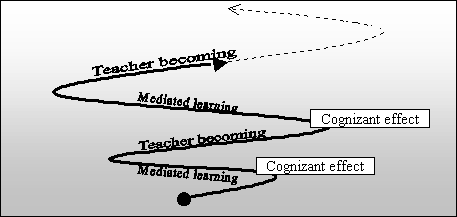
course. These were: (1) “contextual
cognizant effect”, those events that stimulated thinking about teaching; (2) “situated-mediated learning”, in-class
opportunities to reflect further on those events; and (3) “teacher becoming”,
outside of class opportunities to make connections between events/reflections
and on personal past experiences and perceptions. These three themes operated in a recursive relationship as shown
in Fig 1. The regular, practical daily
experience in a school accompanied by a lesson in the course, and then
reflected upon in a journal and on the class listserv, resulted in an expanding
spiraling effect as the pre-service teachers develop a foundational
understanding of teaching.
______________________________________________________
INSERT “Figure 1 Recursive inter-relationship…”ABOUT HERE
______________________________________________________
(1) Contextual Cognizant Effect
A key characteristic of this theme was that learning how to teach became an interactive construction of meaning, where the focus became making complex connections rather than looking for the ‘right’ answer. The contextual cognizant effects introduced in the course played a critical role in enabling the pre-service teachers to link their previously constructed ideas about teaching with their emotional responses to teaching. The pre-service teachers took part in events and activities such as role-playing of classroom management scenarios, observation visits to classrooms, peer teaching and four-day field experiences in two schools. For example, the role-playing experience, requiring each of the pre-service teachers to respond in a teacher’s role, enabled them to make connections between their largely unarticulated fears of confrontational encounters with students, their images of what “good” classrooms should look like, and their desire for knowledge about “how to teach.” These experiences enabled the pre-service teachers to face their fears of inadequacy and confrontation in a supportive and comfortable environment, interacting with colleagues who shared their concerns and needs. Each of these “contextual cognizant effects” included a component of reflection, these opportunities being provided through their daily dialogue journals, e-mail listserv entries, formal and informal class discussion, concept-mapping of their learning, and guiding reflective questions following their observation/investigation activities in classrooms.
As the pre-service teachers participated in each event and reflective experience, they constructed frameworks or scaffolds for themselves upon which they could base future learning and understanding. As their frameworks became recognizable structures, they could then more coherently connect other learning and understandings to these structures, e.g., past personal experiences of education with former teachers, readings, parents, etc. Pre-service teachers found themselves referring to personal stories of their past school experiences, commenting (often in amazement) that they were learning by reflecting on these past experiences. Many examples of these changing structures became apparent as the research data was analyzed. A sample of this data is described below.
A major concern for the pre-service teachers was classroom management, in particular “controlling” the class. Initially entries in journals and on the listserv focused on the fear of controlling a class, but as the visits to schools occurred, the pre-service teachers started sharing what they had seen. For example Andrea wrote on the listserv:
I
think the most valuable thing I learned in classroom management was learning
how and when to vary the class activities. We have all had teachers (especially
since we have all attended university) that spent the whole class lecturing and
getting students to take notes and we know how boring this is. In the
elementary school I was observing, the teacher was continually switching
activities (about every fifteen minutes or so) to accommodate the short attention
spans of the students and their inability to sit still for long periods of
time.
Similarly Cathy commented,
It may
seem overly simple, but one of the best and most effective techniques for
classroom management that I found when observing was counting. It gave the students a chance to become
quiet…One teacher counted so quietly I could hardly hear him and the students
were SO quiet by the time he was finished.
Another one is standing beside the student who is off-task. One teacher just put her hand on his
shoulder (he was wriggling and talking during her "lecture") and he
became very quiet.
Early on in the listserv discussion several pre-service teachers voiced the opinion that disobedient students should be removed from the class, however, as the pre-service teachers visited classrooms a more connected and complex insight to dealing with management developed, as highlighted in one of Caroline’s entries.
I would only use kicking students out of the room as a last
resort…it’s a desperate act that stops the undesirable behavior for only a
short period of time. If every teacher reacts the same way, these kids are
going to spend a considerable amount of their school career in the hallways,
learning nothing and nurturing defiance. Do we really want that? Plus, getting kicked out of class is only a
deterrent for those who are normally well behaved and dislike breaking rules.
The more rebellious see it as a perverse honour. For example, one Grade 9
student who got kicked out of class yesterday received high-fives from his
friends as he left the class. As with many of you, I believe in setting some
firm rules of conduct for students…like Andrea I would identify the
ringleaders…I would then make an appointment to speak to each one of the
initiators individually to see what was going on with them. Work out what kinds
of activities they like best in my class and try to incorporate more of that in
return for better behavior.
As Caroline’s quote highlights, the pre-service teachers started to develop a sense of relationship in their constructions of management from their observations in the schools, and as with Caroline, started to think through the role of a teacher.
(2) Situated-integrated
learning
Opportunities throughout this course for pre-service teachers to integrate theory, research, and practice led to their growth as teachers, as they reported in written and verbal comments. They became more able to question existing practices and offer alternative strategies and perspectives, and to recognize the value of collaboration and the sharing of knowledge. Opportunities to compare elementary and secondary school contexts provided places to examine assumptions about what must be and what could be in different contexts, and to discover commonalities in all teaching experiences. Situating their experiences at school sites enabled them to challenge their assumptions, and to check their perceptions with teachers living in the particular context. Team-teaching experiences enabled the pre-service teachers to share knowledge and perspectives with one another, recognizing the strengths that come from multiple perspectives. Through the reflective elements of the course, which offered them time and space to make sense of these new understandings, the pre-service teachers began to recognize complexities associated with teaching. Their reflective writing and thinking enabled them to develop a vocabulary that encouraged “teacher” thinking rather than “student” thinking, that enabled them to articulate questions and offer alternatives; they began to learn how to question previously held assumptions and beliefs.
The individual and personal nature of the assignments and activities in the course (due in large part to the pass/fail evaluation) enabled the pre-service teachers to develop based on their own previous experiences and understandings. As one pre-service teacher said, “You further your own understanding of yourself and what you are going to end up like,” which they came to recognize and articulate in their reflective writings and discussions. They were able to make connections in their learning, as one pre-service teacher commented, “I see a lot more how the pieces (classroom management, and evaluation, etc.) play together and that the whole course brought that in with all the types of assignments that we are doing with everything we did … it just jump-started my brain into thinking. It was really exciting.” Another pre-service teacher said about the course, “This is linking ideas and you remember it.” A third pre-service teacher reported, “I have never before had a class where I felt that I would keep what I had learned … even when I was just lying in bed and thinking, I was learning more even though the class was over.”
(3) Teacher Becoming
This theme represented the pre-service teachers’ recognition of different positions they occupied in the school context, moving from a student’s position towards a sense of the teacher’s position and the multiple roles that the teacher position implied. The ability of the pre-service teachers to recognize themselves “becoming” teachers was dependent on many complex factors, but some were able to recognize and name the sites of their own and their colleagues’ resistance to complexity and difference. Their desire for simplicity, for being given the answer-key to unlocking the mysteries of teaching, became replaced in some instances by the ability to manage increasing complexities. As they become more comfortable in school contexts, seeing themselves through the eyes of the students who recognized them as teachers, they become less fearful of facing some of the contradictions they saw and experienced. They became aware of their past selves as students and their future selves as teachers and began to forge links between the two. They became more confident in their ability to become teachers, to recognize who they were as teachers. As Emily described about becoming a teacher,
…it is not just something that you can regurgitate on an exam that
you read in a text book, it's a change in your whole concept of yourself and of
teaching, just self awareness and it really just changes who you are…It was
neat like to make a list of your strengths…kind of cocky, but it is important to realize that you have
strengths and what they are and to take them and develop them…I needed to add
two more strengths to my list…my roommate’s boyfriend was there and he said,
“you are serene...like you have a calming effect on people.” And I don't know, I never really thought of that
in myself. But then at the end of the
course Harriet said the exact same word to me.
She described me as being serene and I was like whooo, first of all I
have never heard that word to describe a person, I took it as a major
compliment.
The pre-service teachers became more confident in their ability to become teachers who would be more willing to take risks, to perceive a different type of education. As Harriet commented at her interview after the course,
when I first heard about the course I was like, doing this and this
and I had all this other stuff to do and I thought “I better get a good mark,”
then I found out it was pass/fail, I thought, “What is this all about, I work
hard I want a reward,” but then it kind of makes you think about who you
are. I went, “Wait a minute, I don't
need extrinsic motivation to do this, I am really enjoying this class.” I really learnt a lot. I self-reflected on things that I might not
have thought about before, the other side of issues. To me that is the reason why you are here and that is why you
should be learning, not for a mark…I never fathomed a world without grading…I
then thought, “Yeah this is possible.”
This awareness of themselves as pre-service teachers and their potential capabilities directed their future actions and acted as an impetus to revisit previous teachers and schools, to select appropriate summer jobs, and to re-value their previous experiences. As one pre-service teacher commented in an interview after the course, “You further your own understanding of yourself and what you are going to end up like.”
REFLECTIONS: Not all pre-service teachers were profoundly affected by the experiences offered in the course. One pre-service teacher’s comment, “I didn’t really understand why we were at the school that much,” suggested that connections and possibilities were not as readily recognized by her, and the comment “I put in a lot of work and I like to be rewarded with a grade” suggests that this pre-service teacher still holds a stronger connection to “student” thinking than “teacher” thinking. Concerns of the researchers were focused upon how to get all pre-service teachers (a) able to sustain the excitement felt by many pre-service teachers in their initial field experience throughout their program, (b) able to have experiences in schools that they knew how to value, and (c) to develop an open attitude to see alternatives or see from a more contextually sensitive perspective.
Year 3
RE-PLAN: The study focused on emphasizing parts of the course that seemed to have had the major impact upon the pre-service teachers. In particular, we saw a need to help pre-service teachers develop attitudes that would enable them to be less judgmental, to recognize more their active role in making more open and enabling meaning from their experiences, and make better use of the teachers as experts in the school cultures. Throughout the course, ideas would be related and developed in relation to classroom management.
ACT/OBSERVATION: A major focus of the course was for pre-service teachers to be responsible for their own learning as they moved from a student to a teacher mindset. In particular the instructor said, “You need to get a sense of the ‘other’ in the class.” She emphasized the active role the pre-service teachers had in their own learning, saying, “This class will reveal a great deal if you know how to look, what to look for, and understand schools at both the micro and macros levels.” By the end of the course all those interviewed called this “hands-on” learning that provided life-changing learning.
Teachers and the principal were asked to become actively involved in the course by teaching the pre-service teachers. They described their experiences of becoming a teacher and how they implemented curriculum. In turn, the course instructor taught the teachers’ elementary classes. This partnership relationship evolved a sense of collegiality that situated the knowledge of teaching within a culture, and caused the pre-service teachers to identify more with the teachers they observed and question their previously untested assumptions. For example, the power of a principal telling pre-service teachers that when he started teaching “I wouldn't hire me. I was horrible…I was always going ‘to power’ with kids.” This allowed the pre-service teachers to admit their own fears of being a bad teacher. As he explained, “You don’t own a problem, especially if you do not build it up. In my second year of teaching I went to a PD session and realized I needed to change. I used to think I needed to be harder and punish more, then I realized I was owning the problem and making it worse.” The pre-service teachers came to see management as an issue of respect with students, not a threat to them. Other teachers also told their stories of becoming teachers. The following quotes from pre-service teachers highlights the impact of their talks:
· “I had this great master plan and everything was going to work out perfectly...after [the teacher’s] story I was blown away. He opened my eyes to a whole bunch of ideas and scenarios.”
· “I have never been so interested in what one person has had to say. If I had any doubts about being a teacher before there is definitely no doubts any more. He is the type of teacher I hope to become.”
· “I am grateful to the principal for opening my eyes to these assessment issues, which have been so ingrained in my mind, because I never would have challenged them without his nudge in the right direction.”
· “His discussion was inspirational and gave me several new outlooks on teaching. Every teacher that spoke to us changed the way I look at my goals.”
REFLECTIONS: This use of multiple voices from teachers in the position of teacher educator caused a form of professional development for the teachers that were recognized by the principal of the school as unique. It caused what he called “teacherly conversations” not normally shared amongst teachers. These conversations were brought to the surface by the eagerness and interest of the pre-service teachers.
The pre-service teachers started to feel able to let go of the certainty of university textbook knowledge, and learn to apply ideas to the complexity of teaching. In doing this they initiated teachers' recognition of their professionally developed, situated expertise, where the multiple realities of children are acknowledge in the role of teaching. The teachers’ articulation of their professional knowledge clarified some aspects of teaching for the pre-service teachers, and powerfully enabled the teachers to develop a clearer sense of their own professional knowledge, enabling them to have greater control over their own teaching practices in their classrooms. Teachers were able to recognize the sources of their previously unarticulated teaching practices, i.e., previous experience, personal beliefs and values, societal assumptions, intuition. As they articulated their own professional knowledge, they were able to respond to questions, model professional knowledge and practice, and to enable further questions to be asked regarding teaching practices. This growing sense of confidence in teaching abilities supported the teacherly conversations occurring in the staff-room, in classrooms, and in hallways.
The teachers inspired the pre-service teachers. It was noted that in their journals and listserv entries there was far less negative judgments made of teachers. Pre-service teachers learned to see situations as teachers within a culture, rather than outsiders settling for a surface impression. Discipline problems were still a concern but not a problem, they were a part of the helping pre-services grow, not indicators of success and failure of a teacher. Evidence from this case study showed a change that the pre-service teachers noted in themselves. Whether this change would stay with them as they return to their university programs needs to be further investigated.
Conclusion and summary of findings
The final year of the project, drawing on the three years of data, generated two models for pre-service teachers entering an initial teacher education course, one focused on the process of learning in the course, the second on the phases of development in the course. The integration of the school with the university course created a recursive process whereby the school context caused a cognizant effect that stimulated the pre-service teachers into a sense of dissonance with previous assumptions. This confused state was then mediated by the course instructor situated within the school culture and teachers with the school; through reflective tasks (including journal and listserv) pre-service teachers recognized how they were becoming teachers and looked for more experiences within the school to support their learning. This process of learning cycled throughout the course with visits to classrooms followed by a class in the course, then reflection by the pre-service teachers.
A key focus of the course was to enable the pre-service teachers to create a foundational sense of “teacher” as they continued in their phases of development throughout their teacher education program. The course went through four phases of development. The first phase was to create a comfortable, social environment where the pre-service teachers felt safe to share ideas, concerns and fears. The second phase was to get them focused on growing from a student mindset where they did courses for grades, to a teacher mindset where they took responsibility for their own and others’ learning. The third phase was to enable them to operate within the complex system of a classroom, within a school, within a socio-economic area. A key characteristic of this phase was that they questioned their middle-class, successful school-pre-service assumptions. The final phase represented a celebration of contextual learning, from practicing teachers, school locations and personal reflections, where they recognized what they had learned, acknowledging their evolving, foundational framework of how to be a teacher.
This course represents a radical move from more traditional, content based learning that pre-service teachers expressed as their general experience in university education and highlighted by Goodlad (1988), Wideen (1999) and Zeichner (1999). As suggested by Grimmett (1998) and Samaras et al. (1998), field-based education represents an alternative to more traditional clinical experiences and lecture-based learning of teacher education that continues to separate learning at university and in schools. With a rigorous pass/fail standard in the EDFX200 course, many pre-service teachers felt they worked more, learned more and felt more confident of their learning than other classes in the university. Some even said that until this course they had never realized what “real” learning was about, “this was learning for life.” As Zeichner (1992) advocated, the field experience integrated within a course created an educative experience which prepared prospective teachers to enter learning communities to understand the full range of teachers' responsibilities and to learn to teach everybody's children, not just children like themselves. The field-based learning, non-graded, social interaction attributes of the EDFX200 course were unique experiences for the pre-service teachers. Unfortunately, as highlighted by Russell and Korthagen (1995) and Russell (2001) the value of this type of experience is not recognized by the university system where the grade is generally seen as the primary reason for learning and provides the perceived rigour and accountability required in the political climate. Ongoing research is required to develop the potential for integrated campus and situated contextual learning, and to understand the value of developing partnerships with professionals in the field, this in the face of opposition from multiple sources to changes in institutional structures.
References
Bazeley, P., & Richards, L. (2000). The NVivo Qualitative Project Book. London: Sage.
Blocker, S. L. a. C. M.-B. (1997). PDS versus campus preparation: Through the eyes of the students. Teacher Educator.
Borasi, R., & Siegel, M. (2000). Reading counts: Expanding the role of reading in mathematics classroom. London: Teachers College press.
Clarken, R. H. (1993, April 12-16, 1993). Clinical and field-based experiences to prepare teachers for wholistic practices. Paper presented at the American Edcuational Research Association, Atlanta, GA.
Cooper, S. B. (1996). Case studies of teacher education pre-services in a field-based and a university-based elementary mathematics methods course. Journal of Teacher Education, 47(2), 139-146.
Dewey, J. (1963). Experience and education. New York.: (Copyright 1938 by Kappa Delta Pi.) Macmillan.
Duquette, C. (1993). A School-based teacher education program: perceptions and attitudes. Alberta Journal of Educational Research, 39(4), 419-432.
Duquette, C. (1994). The role of the cooperating teacher in a school-based teacher education program: Benefits and concerns. Teaching and Teacher Education, 10(3), 345-353.
Duquette, C. (1997). Conflicting perceptions of participants in field-based teacher education programs. McGill Journal of Education, 32(3), 263-272.
Finkel, D. (2000). Teaching with your mouth shut. Portsmouth, NH: Boynton/Cook.
Glassman, M. (2001). Dewey and Vygotsky: Society, experience and inquiry into educational practice. Educational Researcher, 30(4), 3-14.
Grimmett, P. (1998). Reconceptualizing the practice of teacher preparation: on not throwing out the concurrent model with the reform bathwater. Alberta Journal of Educational Research, 44(3), 251-267.
Hausfather, S., Outlaw, M., & Strehle, E. (1996). Relationships as a foundation: Emerging field experiences within muliple college-school partnerships. In T. Warren (Ed.), Partnerships in teacher education (pp. 27-41). Maryland: University Press of America.
Kagan, D. (1992). Professional growth among preservice and beginning teachers. Review of Educational Research, 62(2), 129-169.
Kemmis, S., & McTaggart, R. (1982). The action research reader. Geelong, Victoria: Deakin University Press.
Lave, J., & Wenger, E. (1991). Situated learning: Legitimate periperal participation. New York: Cambridge University Press.
MacDonald, C., Mckinnon, M., Joyce, M., & Gurney, P. (1992). Institutional constraints and role expectations: Perspectives on field experiences in an on-site teacher education program. McGill Journal of Education, 27(1), 45-59.
McWilliam, E. (1994). In broken images: Feminist tales for a different teacher education. New York and London: Teachers College, Columbia University.
Merriam, S. (1991). Case study research in education: A qualitative approach. Oxford: Jossey-Bass Publishers.
Metcalf, K. K., Hammer, M.A. Ronen, and Kahlich, Pamela A. (1996). Alternatives to field-based experiences: The comparitive effects of on-campus laboratories. Teaching and Teacher Education, 12(3), 271-283..
Miles, M., & Huberman, A. (1984). Qualitative data analysis: A sourcebook of new methods. Beverly Hills, CA: Sage publications.
Russell, T., & Korthagen, F. (Eds.). (1995). Teachers who teach teachers: Reflections on teacher education. London: Falmer Press.
Russell, T. (2001). Radical program change in preservice teacher education: What and how we learn from personal and institutional experience (Meeting Paper ). Seattle: American Educational Research Association.
Samaras, A., & Shelly, G. (1998). Scaffolds in th field: Vygotskian interpretation in a teacher education program. Teaching and Teacher Education, 14(7), 715-733.
Shen, J. (1994, February 16-19, 1994). A study in contrast: Visions of preservice teacher education in the context of a professional development school. Paper presented at the Annual Meeting of the American Association of Colleges for Teacher Education, Chicago.
Stake, R. (1994). Case studies. In E. Guba & Y. Lincoln (Eds.), The handbook on qualitative research .
Vygotsky, L. S. (1978). Mind and society: The development of higher psychological processes. In M. Cole, V. John-Steiner, S. Scriber, & E. Souberman (Eds.) Cambridge, MA: Harvard University Press.
Warren, T. (1996). Partnerships in teacher education. Maryland: University Press of America.
Wideen, M., Mayer-Smith, J., & Moon, B. (1998). A critical analysis of the research on learning to teach: Making the case for an ecological perspective on inquiry. Review of Educational Research, 68(2).
Wideen, M., & Lemma, P. (1999). Ground level reform in teacher education: Changing school of education. Calgary: Detselig Enterprises Ltd.
Wiseman, D. L., and Patricia L. Nason. (1995). The nature of interactions in a field-based teacher education experience. Action in Teacher Education, 42(3), 1-12.
Zeichner, K. (1992a). Rethinking the practicum in the professional development school partnership. Journal of Teacher Education, 43(4), 296-307
Zeichner, K. (1999). The new scholarship in teacher education. Educational Researcher, 28(9), 4-15.