ACIS projects apply methods from control, robotics, artificial intelligence, and automation to physical systems.
Current and Recent Projects
8 projects
Active
AI-powered autonomous drone mapping for risk assessment
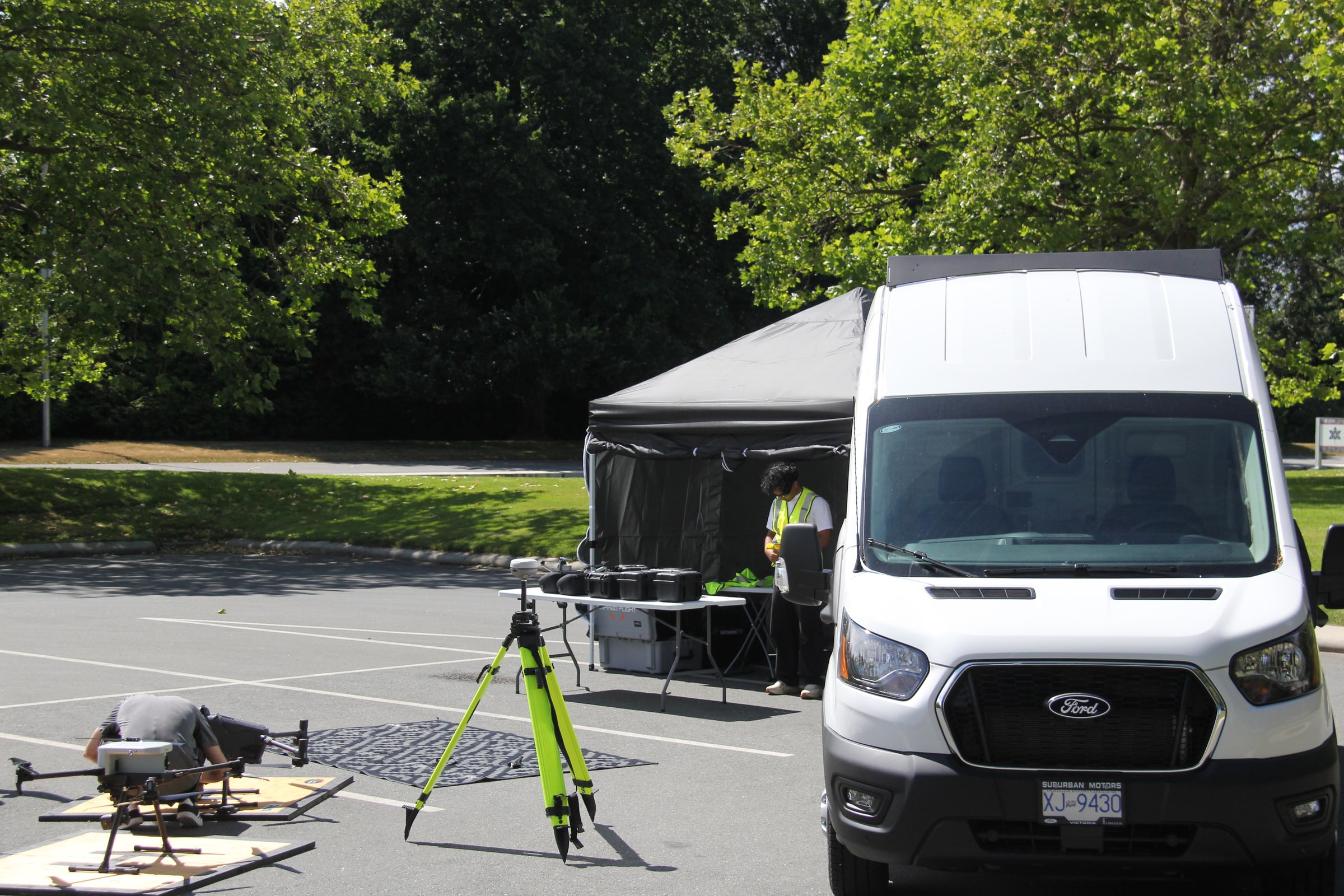
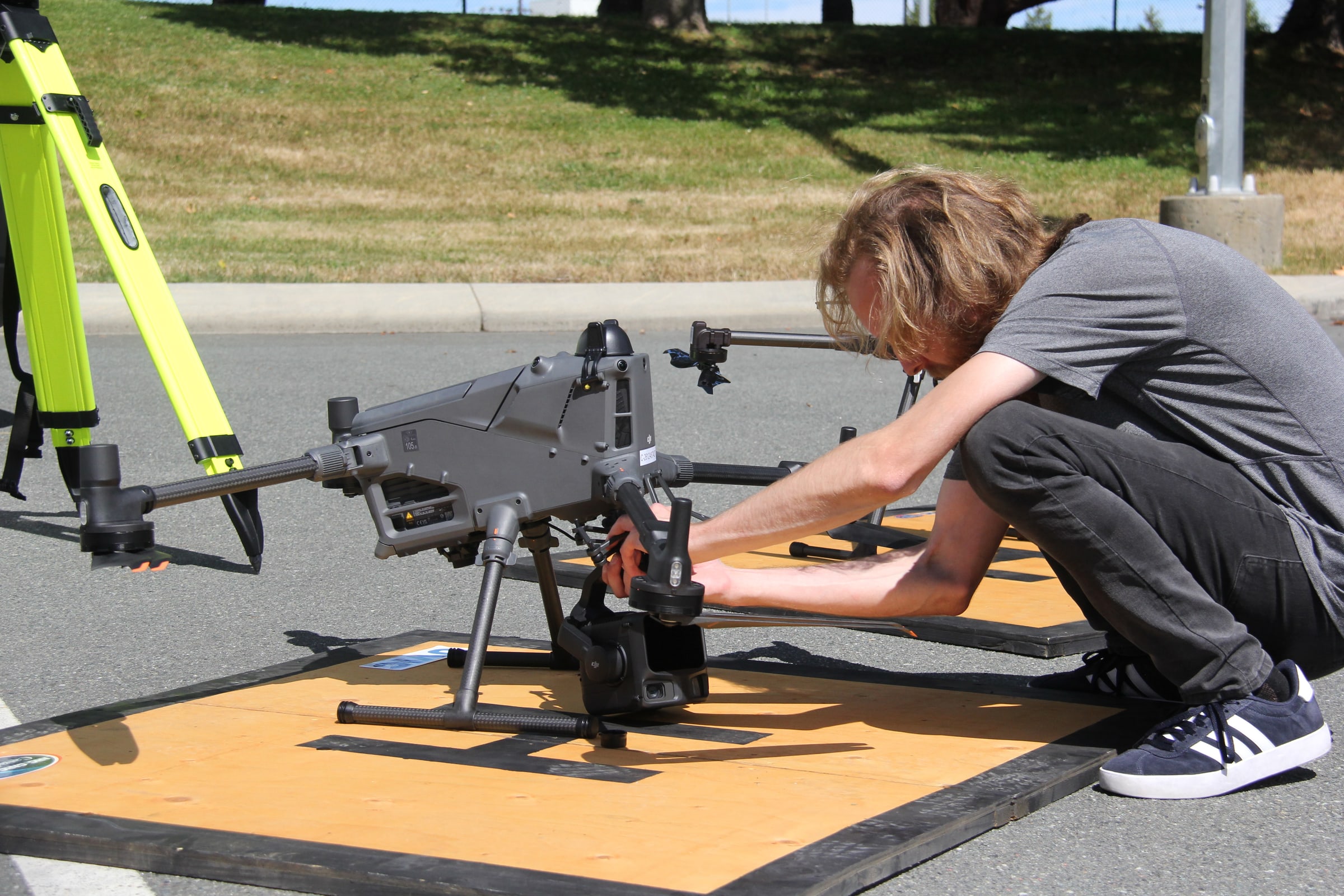
ACIS is advancing an AI-enabled autonomous drone surveying and mapping system for flood and wildfire risk assessment. The system uses AI-driven data collection and analysis to deliver centimetre-scale mapping accuracy while reducing costs and removing the need for on-site technical specialists. The technology supports land-use planning, housing development, infrastructure monitoring, emergency response, and applications in smaller, remote, and Indigenous communities, with additional relevance for defence and situational awareness in remote areas.
Cowichan Tribes Emergency Services / InDro Robotics / UVic Centre for Aerospace Research
Funders
PacifiCan
Completed
IPES: Intelligent Plant Execution Systems
Modern industrial plants, similar to smart factories, can use Industrial Internet of Things systems to interconnect software agents, controllers, sensors, actuators, and other physical assets. IPES creates a digital twin for a hydrogen-natural gas mixing plant to monitor and control processes and predict and plan maintenance. The project develops a multi-agent machine learning server, where each agent analyzes a particular aspect of each unit and makes process-control or maintenance decisions. The resulting add-on analytics platform for OPC-UA compatible plants uses supervised and semi-supervised learning, real-time simulations, and digital twins to handle uncertainties such as leakage or equipment failure without halting production or waiting for human intervention.
NSERC / FortisBC Energy Inc. / Hetek Solutions Inc.
Completed
Responsive and Robust Object Detection for Industrial Point Cloud Applications
This project creates practical three-dimensional and shape-based object detection methods for high-precision industrial applications such as metrology and visual quality inspection. To achieve the required accuracy and computational performance, the work combines state-of-the-art machine learning methods with classical statistical methods so the resulting software can operate effectively across different application scenarios.
AIEL-Photogram: AI-Enabled Aerial High-Precision Industrial Photogrammetry using UAV Formation
Photogrammetry creates three-dimensional models from two-dimensional images. AIEL-Photogram focuses on high-accuracy and high-fidelity photogrammetry model generation from images captured by drones, supporting condition assessment for structures and geographic areas through AI-enabled aerial mapping workflows.
IMES: Integration of Artificial Intelligence into Manufacturing Execution Systems
The IMES project sits at the intersection of industrial engineering, robotics, and computer science. It develops intelligent, adaptable manufacturing orchestration systems that reduce obstacles to Industry 4.0 implementation, helping manufacturers cut operational costs, improve project reliability, and make workplaces safer. The project enhances planning, execution, and monitoring in manufacturing execution systems by developing digital twins of production lines, multi-agent systems powered by OPC-UA, and AI-based decision-support systems.
AIARA: Artificial Intelligence Enabled Highly Adaptive Robots for Aerospace Industry 4.0
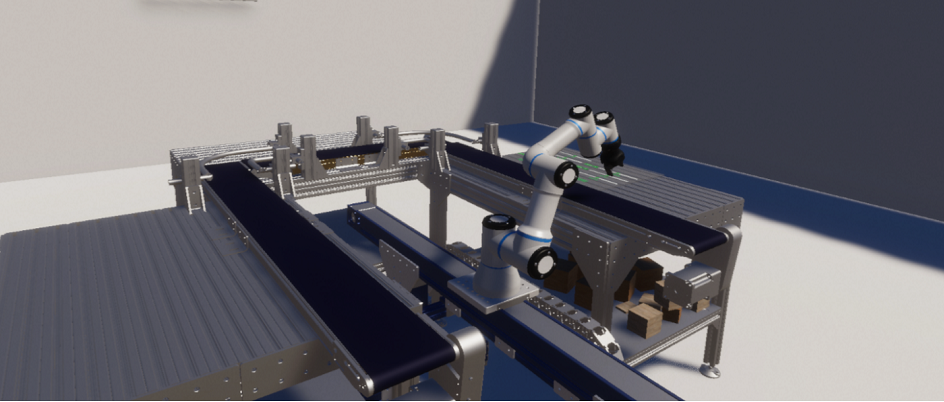
The AIARA project seeks novel solutions for flexible and versatile robotic manipulation using reinforcement learning methods. Conventionally, an agent is trained for a specific task of the robotic system and must be retrained if the task objective changes. AIARA develops adaptive agents for clusters of related tasks so retraining can be avoided for certain environmental changes. The methods are further applied to multi-arm collaboration scenarios, training multiple agents with inter-adaptation and advancing reliable manipulation by adaptive learning robots in complex environments.
Deep-learning for Distributed Intelligence Systems with Application in Robotics and Computer Vision
This project investigates shape-based and 3D computer vision for more accurate and robust object recognition and pose estimation using unsupervised deep learning models that reduce the need for labelling new datasets. It also studies more complex robot operations that require flexibility and coordination between adaptive robots and vision systems for manufacturing automation and quality inspection. The work develops a distributed intelligent system with two robotic arms and multiple RGB-D cameras to examine and validate data-driven machine learning for practical industrial implementation.
3D Active SLAM for Mobile Mapping of the Interior of Floating Roof Fuel Tanks
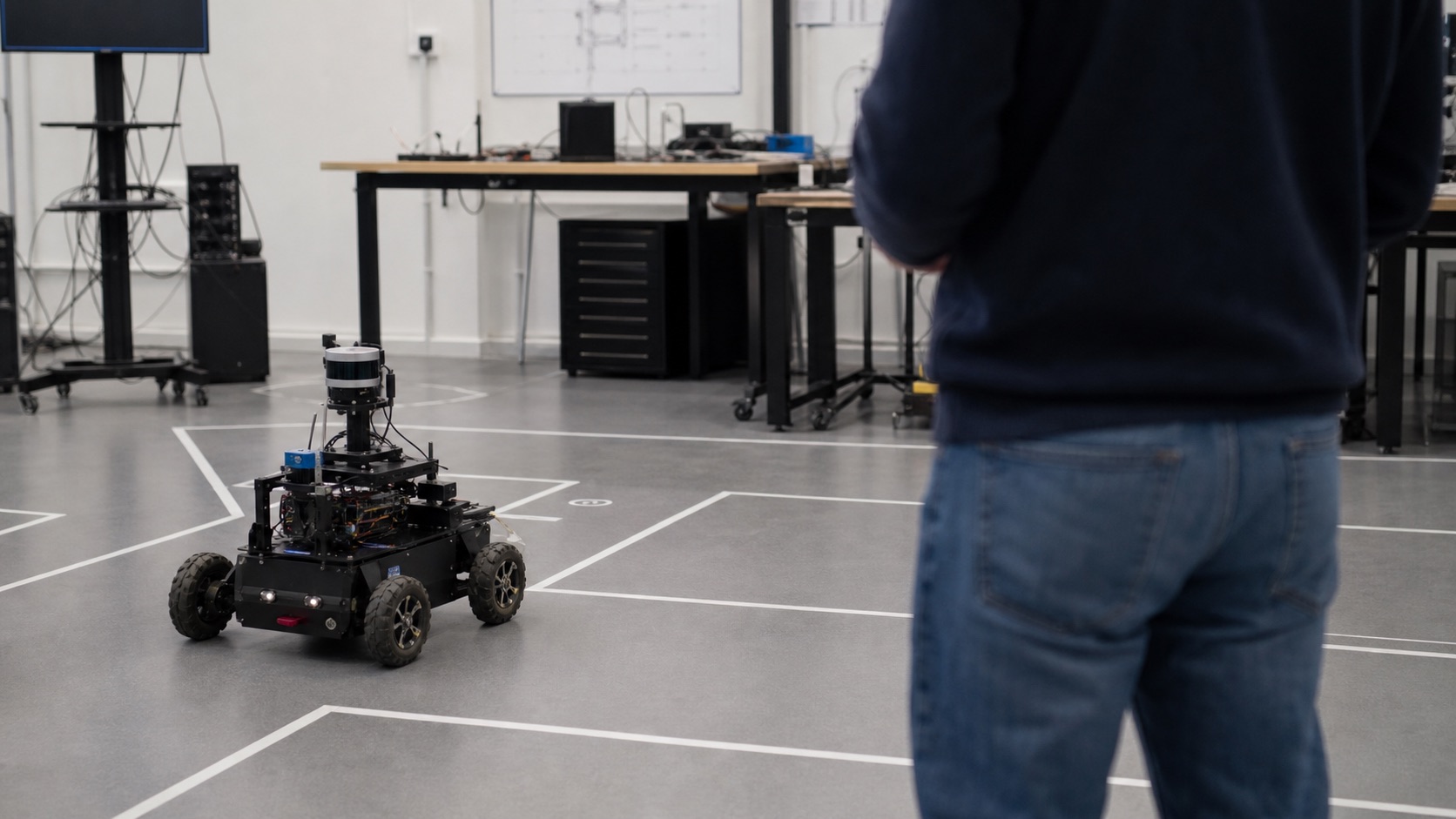
Manually scanning many environments is labour intensive, and the difficulty increases in crowded, confined, dark, or complex spaces. Floating roof fuel tanks are the target environment for this project, where human mapping requires specialized training and manual scanning inside the tank. The project aims to reduce that burden by developing a robotic system capable of autonomously mapping tank interiors.