PPMstar Collaboration
Web page: https://ppmstar.org
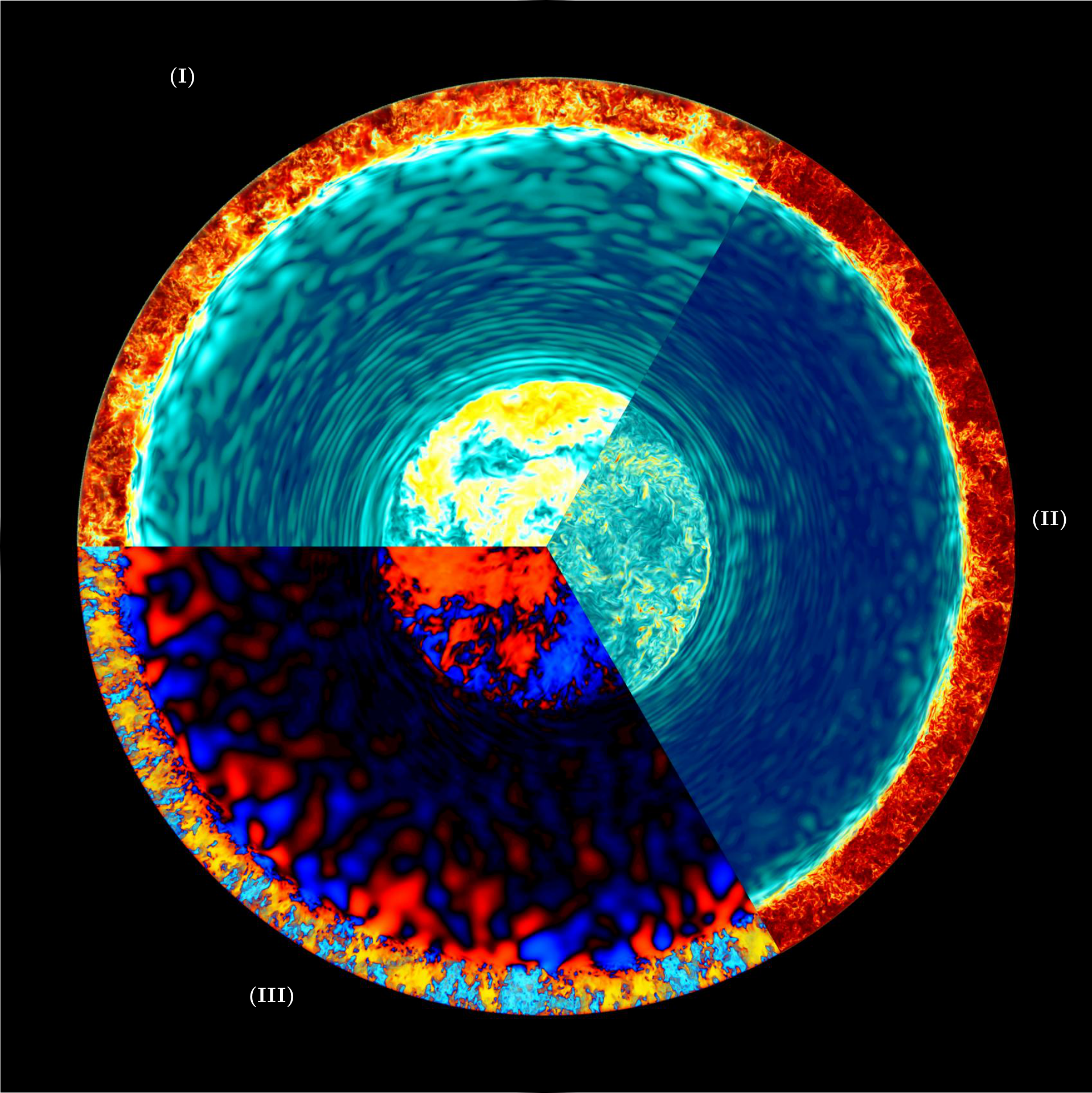
Our group has collaborated with Paul Woodward’s Laboratory of Computational Science and Engineering at the University of Minnesota since 2006. The work of the PPMstar collaboration is focused on the application and development of the PPMstar code, a state-of-the-art, 3D hydrodynamics code optimized for stellar astrophysical simulations. The code is used to study the evolution of stars, their interior hydrodynamic mixing and oscillation processes, and their impact on the Universe. The collaboration is supported by the National Science Foundation and the Natural Sciences and Engineering Research Council of Canada. The large-scale simulations are carried out on the Digital Alliance computer Niagara operated by SciNet at the University of Toronto.
Example works
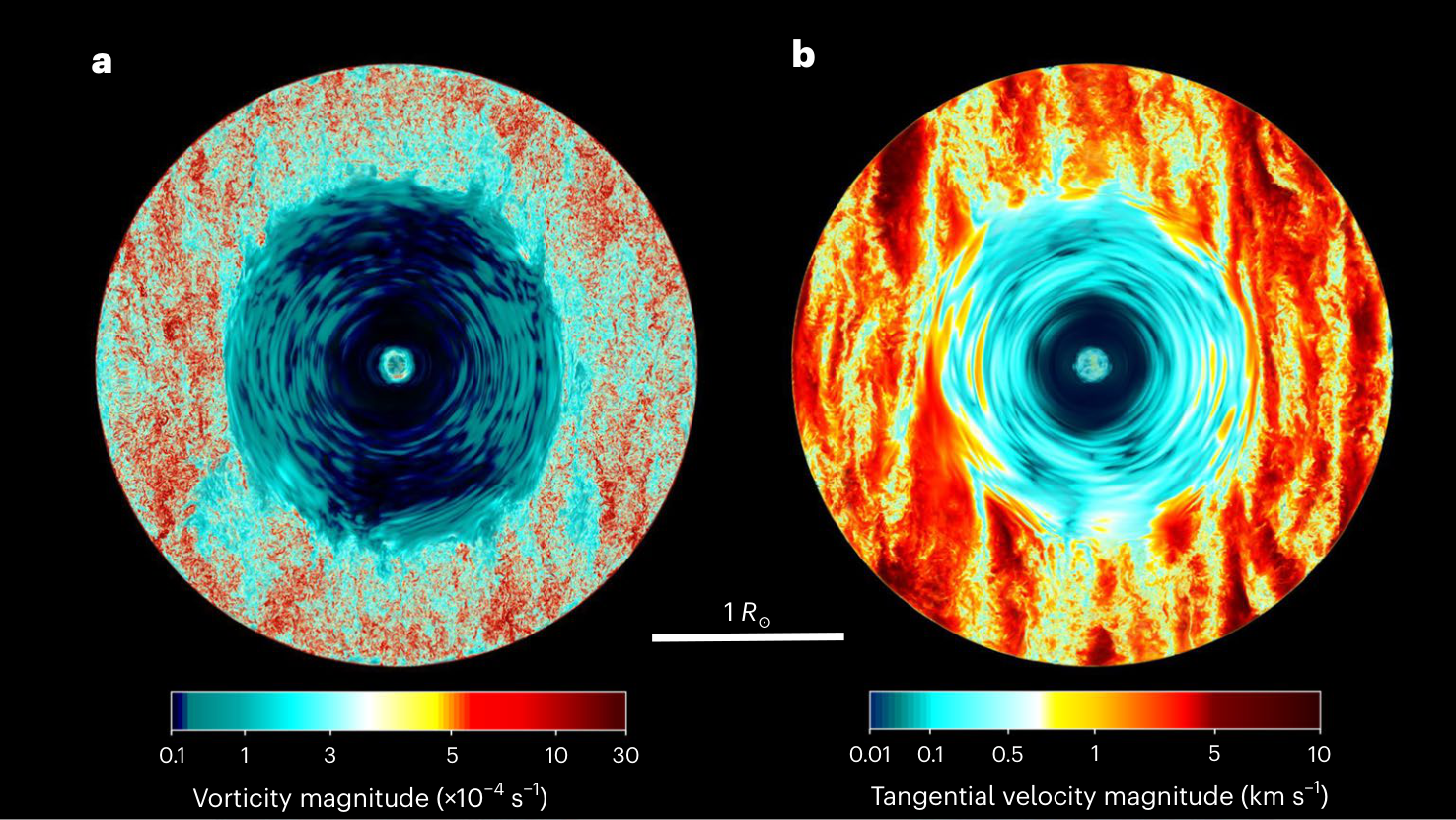
Wave-driven mixing enhanced by rotation in red giant branch stars
Blouin et al. (2025), Nature Astronomy
Red giants show changes in their surface chemical composition that require material to be carried from the nuclear-burning interior across a stable layer that acts as a barrier. These simulations show that rotation strongly enhances the mixing driven by internal gravity waves, enough to cross the barrier and explain the observed abundance changes.
3D hydrodynamic simulations of massive main-sequence stars II: convective excitation and spectra of internal gravity waves
Thompson et al. (2024), MNRAS 531, 1316
Massive stars show a low-frequency power excess in their light curves, seen as stochastic low-frequency variability. From high-resolution 3D simulations of a 25 M⊙ star, this paper characterises the internal gravity waves excited by the convective core and the spectra they produce.
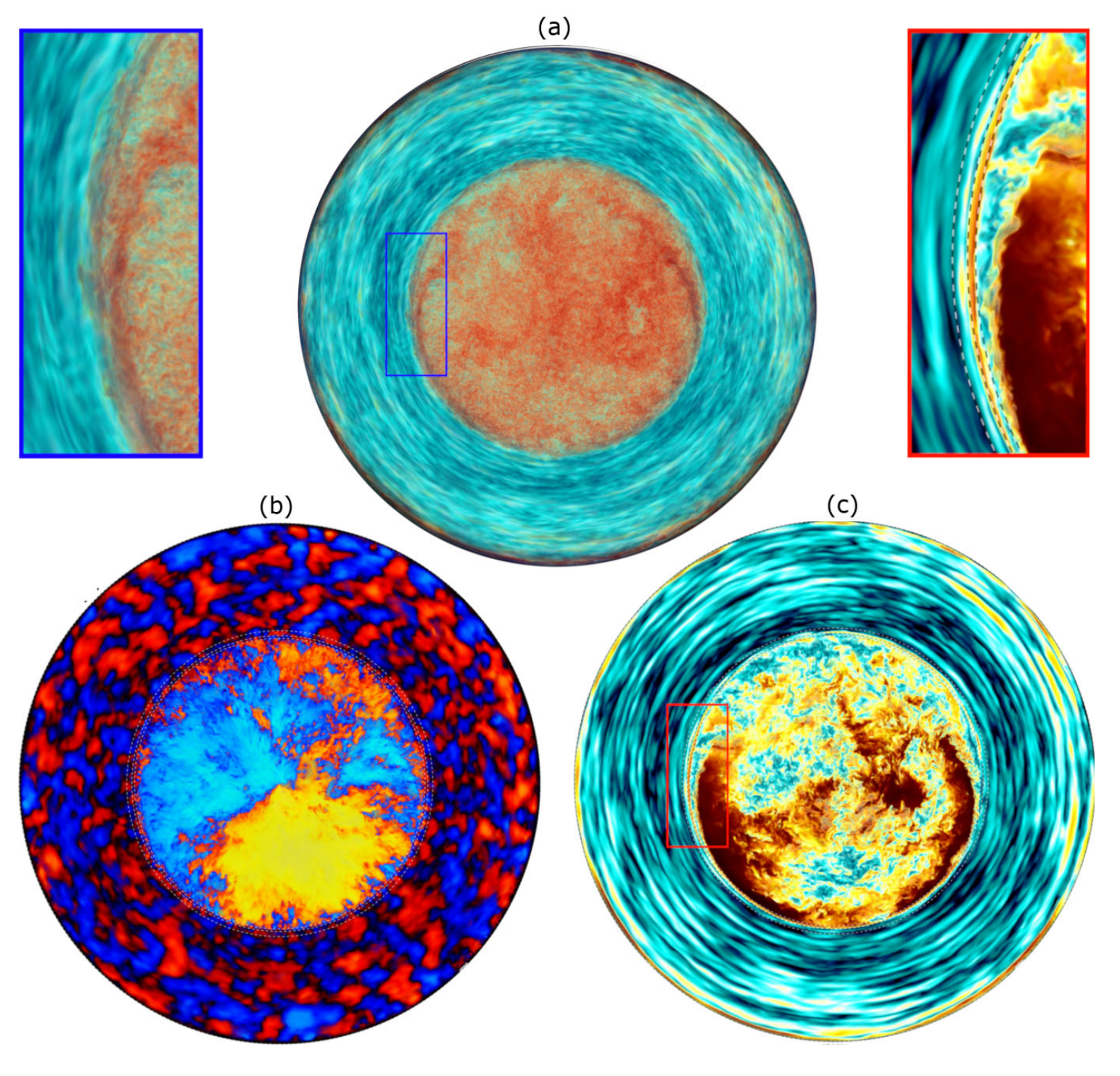
3D hydrodynamic simulations of massive main-sequence stars IV: internal gravity waves matter for stochastic low-frequency variability
Pathak et al. (2026), ApJ 1000, 89
The origin of the stochastic low-frequency variability seen in massive stars by CoRoT and TESS has been uncertain. High-resolution 3D simulations of a 25 M⊙ star show that internal gravity waves excited in the interior produce surface brightness variations that match the observed signal.