
Maintenance
contact | home | lab | links | opportunities | people | publications | research |


 | teaching

"I'm beginning to wonder if our terms of reference may be a little too broad...?"
That's Not My Job!
(a fable about taking responsibility)
"This is a story about four people named Everybody, Somebody, Anybody and Nobody. There was an important job to be done and Everybody was sure that Somebody would do it. Anybody could have done it, but Nobody did it. Somebody got angry about that, because it was Everybody's job. Everybody thought Anybody could do it, but Nobody realized that Everybody wouldn't do it. It ended up that Everybody blamed Somebody when Nobody did what Anybody could have done."
Maintenance tasks
All group members share various duties including taking care of the lab equipment and instruments, filling solvent bottles and liquid nitrogen. The general rule is, of course, to leave something in the same state you'd like to find it: clean, tidy, and ready to go. Issues? Post them on the General channel on Teams.
- 3D printer (Bragi)
- ALPHA Flow IR (no one currently)
- Backing up your data (everyone)
- Base bath (Maxine)
- Chemical inventory (everyone via Quartzy. Scott to oversee)
- Fumehoods (everyone!)
- Gas cylinders (all grad students and postdocs; replace when a cylinder is emptied)
- Glassware (Maxine)
- Glovebox, full-sized (Jack)
- Glovebox, small (currently disused)
- Hotplate-stirrers (everyone)
- Nitrogen generator (currently disused)
- Rotovap (Maxine)
- Sonicator (Bobby)
- SPS (Rosenberg group)
- Stores (everyone)
- Synapt mass spectrometer (Jack/Bobby)
- TQD mass spectrometer (Bragi)
- UV/Vis and fluorimeter (Peter)
- Vacuum pumps (everyone)
- Waste management (Maria)
If something breaks and you don't know how to fix it, post the question on the General channel in Teams. If you need the help of the electronic shop, you need to provide me with the following information about the piece of equipment:
1) Make and model number (photos are good)
2) Serial number (photos are good)
3) Estimated importance of the equipment. What downtime for the equipment is acceptable.
4) The issue with the equipment to be serviced (photos are good of any indicator lights)
3D printer
Bambu labs X1 printer is in equipment room. Consult with maintainer to get training.
ALPHA
Keep the Bruker ALPHA flow IR maintained and functioning.
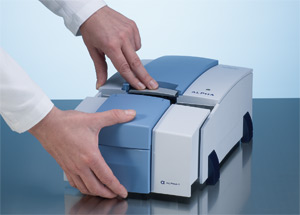
- How to start up the Bruker ALPHA
- How to take an IR measurement with the Bruker ALPHA
- Set up for continuous IR readings
- Reaction monitoring Bruker ALPHA
- Changing the pump valves Bruker ALPHA
Backing up data
The group has its own research share, which you should regularly back your data up to. Instructions ( ).
).
Base baths
Glassware cleaning protocol (). See SOPs page for how to change a base bath. That is the job of the base bath person.When you use the base bath, you should first remove everything in there, rinse and leave on drying rack.
Chemical Inventory
Manage the inventory entries on Quartzy, and train new users.
New users:
Register yourself on quartzy.com or contact inventory manager to get invite to join the McIndoe group. Log in before trying any of the steps below!
Inventory search:
- Click on the inventory tab on the top of the page
- Use the search function and/or other filters on the left side to check if your product is there (highest chance if you search on CAS# chemical name may not be the one you put in)
- If you finish a compound look it up in the quartzy directory and delete it from there and if needed order a new supply clicking the blue request bottom on the top right after you open your compound. Make sure to check on the price and quantity as described before.
Ordering:
- Add request (blue bottom at top left)
- Fill out as much detail as possible but at least Vendor, Catalog #, Item Name, unit size and unit prize (in CAD!)
- click add request
- check periodically to see if your request moves from added to approved to order and eventually received
- Once your order has arrived add the CAS# and storage location. Go to the inventory tab at the top of the page. Your chemical should be listed first (new ones are on top) click on it and add the location under location and the CAS# under specs.
Fumehoods
Consult UVic's guidelines for correct use.
Gas cylinders
Delivery of new cylinders from stores as needed. This job is best done on a schedule: once a week, take down all empties and bring up replacements, including the spares. The person whose job this is needs to set up a time for this to be done and to recruit help from other lab members as needed.
Two relevant documents: the Occupational Health Safety and Environment's Compressed Gas Cylinders: Safe Handling and Use and Step-by-step Transport and Connection of Compressed Gases.
Glovebox, full-sized
A paper copy of the manual () is in the office and a copy is available on DVD. Another version of the manual () with more info on error messages.
- Preparation () of atmosphere indicator (). This will be stored in the glovebox in an Erlenmeyer flask with a ground glass stopper but no grease. The material does not need to be filtered as indicated in the prep.
- Bi-weekly testing of atmosphere, or when appropriate if a problem is suspected. You do not need to use very much! Add approximately 0.5 ml of indicator to a small vial and allow it to evaporate. If the solid left behind is green or blue you are good to go. If it is yellow or orange or red the box will need to be regenerated.
- Regeneration of atmosphere when needed (process can be found on page 48, Chapter 10, of the manual. Seems to be about once a month during heavy use).
- Periodic tidying and clean-up when necessary.
- General troubleshooting and problem solving (Chapter 21 of the manual lists various error codes along with possible cause and first steps to fixing the problem).
- Regenerate the large glovebox | Alternate regeneration video
- Using a glovebox
- How to remove a sample from the glovebox
- How to change the gloves on a glovebox
- Cleaning the valves on a glovebox
- Glovebox maintenance tasks
Glovebox, small
As for the big glovebox, above (manual ). The regeneration tank and regulator are kept by the big glovebox, so they need to be disconnected and wheeled to the MS room. Make a connection with the regeneration line and start the process - make sure this is last thing in the evening, so regeneration can complete overnight and the cylinder can be removed first thing in the morning.
Glassware
Police the use of glassware in the lab, i.e. make sure people are being good citizens and cleaning their glassware and putting it away. Ensure there is always room in the oven and empty as needed.
MSDS
File all MSDSs. Note that MSDSs are also available online at http://www.sigmaaldrich.com/safety-center.html.
Nitrogen generator
The N2 generator is in the small room next to the instrument room. Manual ().
pH meter
For use, consult manual ().
Rotary evaporator
Monitor use and keep functional.
Sonicator
Weekly task of emptying the sonicator, remove the basket and rinse/wipe down the basket and the sonicator with IPA, and refilling with fresh distilled water.
SPS
A paper copy of the manual () is in the office and a copy is available on DVD. The McIndoe Group is in charge of the toluene and dichloromethane lines.
Stores
Weekly visits to stores to replenish basic supplies.
General lab: Gloves: S,M,L (xS if you wear them) at least 1 box, add another one if almost empty. Needles: 1 box. Syringes: 1, 3, 5, 10 mL all non-rubber buy another box if less than 20. Kimwipes: buy more if less than 2 boxes are remaining. Paper towels: buy more if less than 2 packs remaining.
MS lab: Gloves: M,L 1 box each. Pipette tips: buy more when less than 50 remain (make sure to buy the 1.5 mL ones)
Return solvent carriers on the way.
Synapt G2Si mass spectrometer
Ballast pump for 15 minutes weekly. Police use of instrument, ensure users are filling out logbook, leaving instrument tidy, etc. Overview and Maintenance Guide. Waters literature and application notes.
TQD mass spectrometer
Ballast pump for 15 minutes weekly. Police use of instrument, ensure users are filling out logbook, leaving instrument tidy, etc.
- TQD and photodiode array detector
- TQD editing MS files for SIR, MRM
- TQD intellistart menu, instrument resolution and tuning
- SIR for metal complexes
- TQD scope window functions
- TQD real time instrument parameters
- Shut down the TQD
- TQD cleanup
- TQD solvent aggregation
UV/Vis and fluorimeter
Keep the the portable UV/Vis maintained and functioning.
Vacuum pumps
Any vacuum pump you're responsible for needs ballasting regularly, and the oil changed when it becomes very dark in colour. Ballasting is just allowing air to leak in to the pump; the pump becomes hot and any residual solvents are purged from the oil. Do this weekly for about 15 minutes. Don't forget to switch it off! Always set yourself an alarm. Different pumps have the ballast in different places; see below and/or check the manual for yours! The diaphragm pump on the rotovap does not have a ballast.
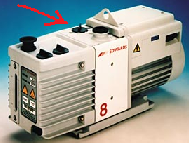
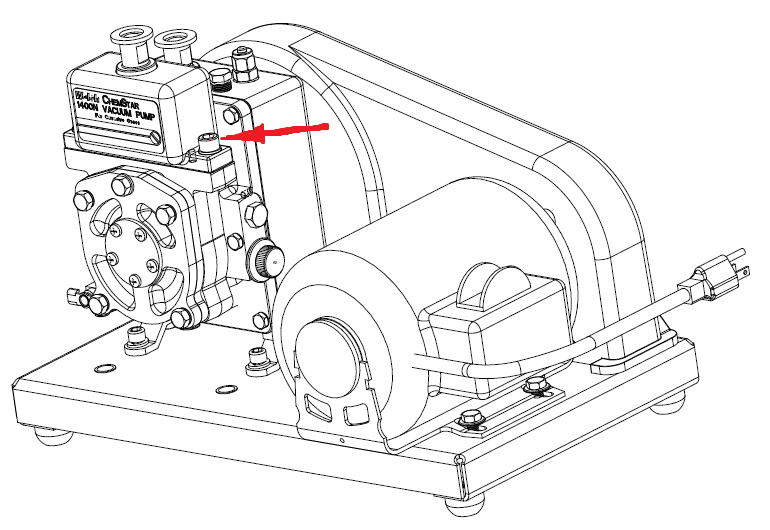
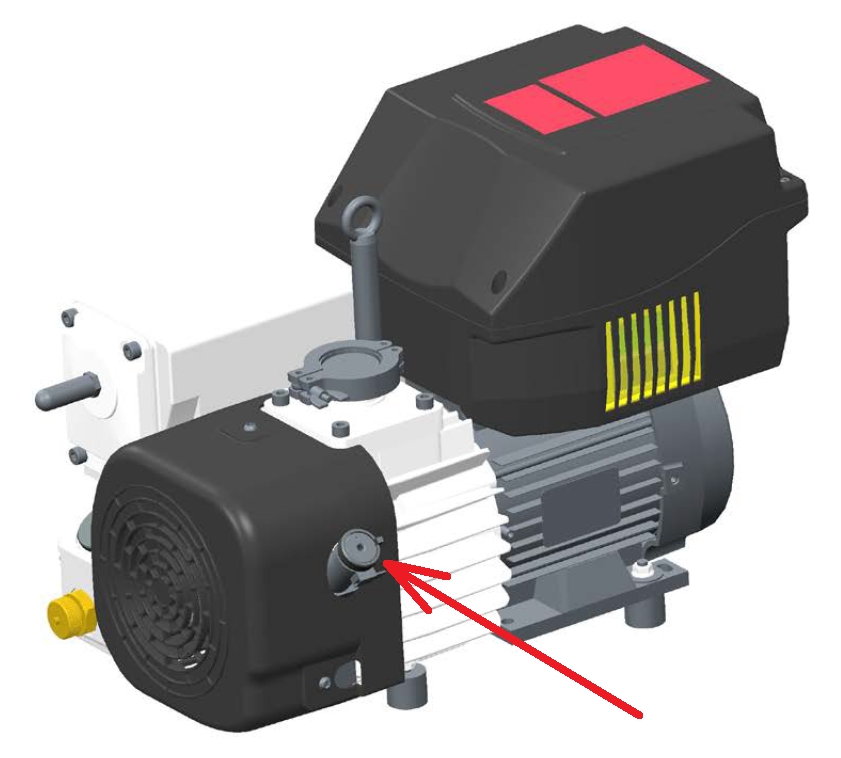
Manuals: Edwards RV3/5/8/12 | Welch Chemstar | Leybold SV40-65
Oil mist filter: EMF20
Waste management
Organize the pick-up of waste from the lab. Detailed instructions here (). Keep the waste area clean and empties disposed of. Keep the chemical room clean.
© JS McIndoe, Department of Chemistry, University of Victoria · Updated 1 May, 2026